

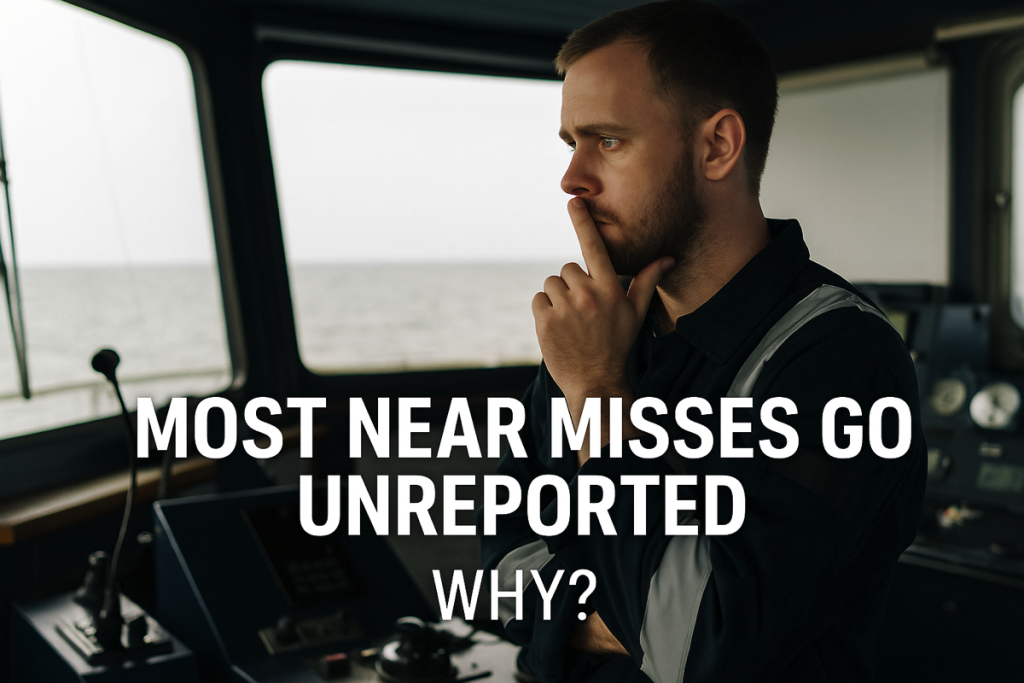
It was close. Too close. A slipped ladder. A misread pressure gauge. A near grounding. You handled it. Nothing broke. No one got hurt.
So… you move on.
And that’s the problem.
In 2025, the maritime industry continues to promote safety culture — but we’re still ignoring the goldmine of information hiding in near misses. These events are free training, silent warnings, and performance signals. But instead of learning from them, most ships bury them in silence.
Why? And what is it costing us?
🙊 Why Near Misses Go Unreported
- Fear of blame“If I report it, I’ll get written up or judged.”
- Overconfidence“I fixed it. No need to report what didn’t happen.”
- Paperwork fatigue“That report takes too long — and nothing will change anyway.”
- Poor follow-up history“We reported last time. Nobody acted.”
- Culture of silence“Speaking up isn’t worth the risk.”
These barriers create a dangerous illusion: that things are running smoothly, when they’re actually one small mistake away from a real accident.
🧠 What Near Misses Really Mean
Every near miss contains a lesson. It’s an insight into:
- Complacency
- Poor system design
- Fatigue impact
- Inadequate training
- Unsafe routines
- Miscommunication
If investigated properly, near misses become leading indicators of accidents. They help us fix problems before damage, injury, or loss occurs.
In fact, the best-performing fleets in 2025 treat near misses not as failures — but as data points for prevention.
📉 The Cost of Silence
When we don’t report near misses, we:
- Repeat the same risks
- Allow unsafe trends to grow
- Lose opportunities to improve
- Undermine trust between crew and leadership
- Fail to meet SMS and vetting expectations
Underreporting also weakens external audits. Inspectors don’t want zero near misses — they want to see evidence that you’re catching and correcting issues early.
🛠️ What Can Be Done?
- Normalize reports: Make it clear that near misses are not punishable — they’re expected and respected.
- Reward transparency: Thank crew who speak up, even informally.
- Simplify forms: Use digital systems with drop-down fields and voice input.
- Review regularly: Post-action learning sessions turn reports into progress.
- Lead by example: Senior officers should share their own past near misses — and what they learned.
⚓ Final Thought
Reporting a near miss isn’t a burden. It’s a leadership act. One that says, “I care about what almost happened — because I care about what could.”
Until we treat near misses as moments of insight, we’ll keep seeing the same accidents — only next time, we won’t be so lucky.
📬 Love all things maritime? Get exclusive stories, practical tips, and leadership insights delivered straight to your inbox—subscribe now!!!
We send out regular insights, regulation changes, and practical guides for cadets and seasoned officers alike.
Fill out the form below and stay connected with Maritime Mindshift.
📢⚓ Calling All Maritime Enthusiasts!
📝📸 Have an article, story, or photo to share? Send your submissions to contact@maritimemindshift.com and get featured on our blog!
🌊🚢 Join the crew—let’s navigate new horizons together!
“Ready to transform your maritime journey from dream to reality? Dive into De Cadete a Capitán for practical lessons, real-life stories, and the mindset you need to lead with confidence at sea. Set your course for success—grab your copy today and start charting a new future!”

Deja una respuesta