

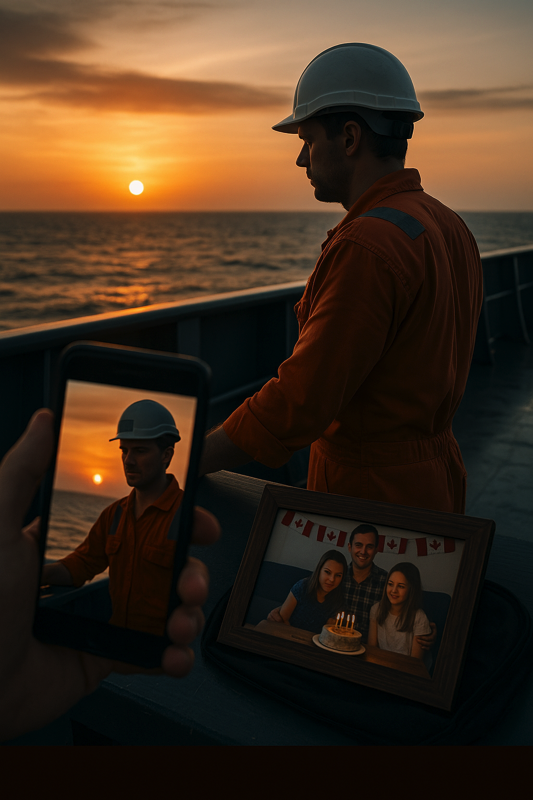
There’s a special kind of silence that follows a crew member after checking their messages and seeing a family photo — a birthday party they missed, a newborn they haven’t met, a funeral they couldn’t attend. It’s the silence of sacrifice, and it’s a weight many seafarers carry with quiet strength.
The world depends on ships. But behind every ton of cargo delivered, there’s a father who missed a first step, a daughter who didn’t make it to graduation, or a partner who’s celebrated another anniversary alone. These are the stories not found in shipping reports or performance charts — but they’re very real.
🎂 Birthdays, Graduations, First Words — All by Video Call
Modern connectivity helps — sometimes. But a video call from a rolling cabin doesn’t replace presence. You can watch your child blow out candles through a screen, but you can’t hug them after. You can’t taste the cake. You can’t feel the moment.
Seafarers are told to stay strong, to “focus on the mission.” But no one trains you for the ache of being absent, especially not repeatedly, year after year.
⚰️ Goodbyes That Never Happened
One of the hardest moments for any mariner is the call that comes too late. A parent passed. A friend had an accident. And you’re not just far — you’re inaccessible. Maybe there’s no port for days. Maybe you can’t even respond right away.
Grief at sea is silent. It doesn’t get processed. It gets stored — until someday, somewhere, it surfaces. And by then, the world expects you to be fine.
🧠 Emotional Fatigue Is Real — and Often Ignored
The shipping industry is structured around resilience, compliance, performance. Emotional health, though recognized in recent years, still sits quietly in the background. Mental health tools exist, yes — but stigma lingers, and many seafarers still carry the old mindset: “Handle it alone.”
But isolation, missed milestones, and suppressed grief add up. And they don’t just affect mood — they affect judgment, alertness, and safety.
🗣️ We Need to Talk About It — Openly, Without Shame
There’s strength in professionalism. But there’s also strength in vulnerability. Shipboard culture often celebrates toughness — but real toughness is acknowledging when something hurts.
Leaders who make space for these conversations — even short ones — build better teams. Crew members who support each other emotionally create safer, more humane environments. And families who understand the toll can help by being patient, present, and compassionate from afar.
🧭 Final Thought
The job is demanding. The voyage is long. The sacrifice is real. But behind every missed milestone is a human being who’s doing their best to provide, to serve, and to endure.
So if you’re reading this and you’ve missed too many moments — know this: you’re not alone, and your sacrifices are seen, even when no one says it aloud.
📬 Love all things maritime? Get exclusive stories, practical tips, and leadership insights delivered straight to your inbox—subscribe now!!!
We send out regular insights, regulation changes, and practical guides for cadets and seasoned officers alike.
Fill out the form below and stay connected with Maritime Mindshift.
📢⚓ Calling All Maritime Enthusiasts!
📝📸 Have an article, story, or photo to share? Send your submissions to contact@maritimemindshift.com and get featured on our blog!
🌊🚢 Join the crew—let’s navigate new horizons together!
“Ready to transform your maritime journey from dream to reality? Dive into De Cadete a Capitán for practical lessons, real-life stories, and the mindset you need to lead with confidence at sea. Set your course for success—grab your copy today and start charting a new future!”

Deja una respuesta