

🌊 How to Survive Emotionally on Long-Term Contracts at Sea
No one talks enough about the emotional side of life at sea. We hear about storms, schedules, and safety drills — but what about the silent storms inside? For many seafarers, signing a long-term contract means months away from family, limited communication, isolation, and a constant mental balancing act between professionalism and survival.
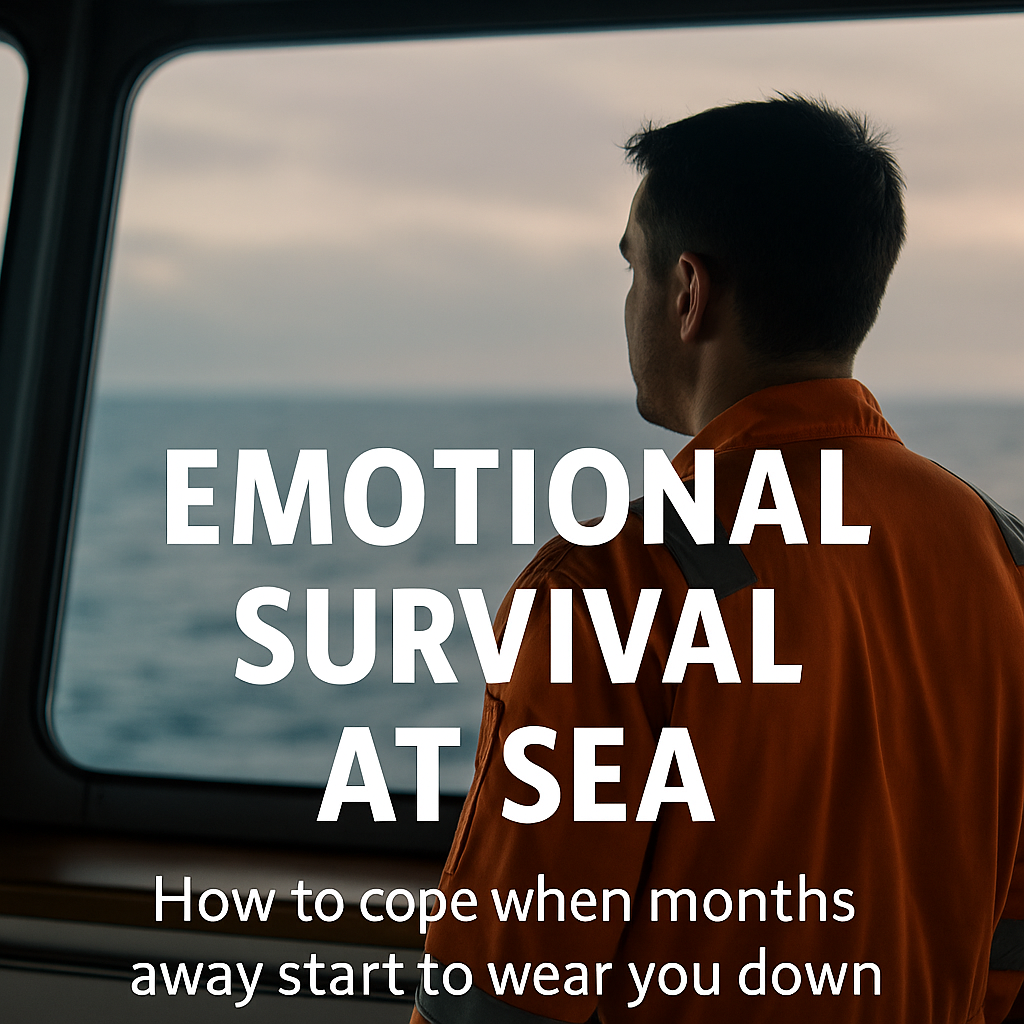
What begins as excitement — new voyage, new crew, new challenges — often shifts into emotional fatigue by the halfway mark. Days blur. The routine becomes numbing. Birthdays are missed, children grow without you, and phone signals are often weaker than your will to smile. It’s in those quiet moments, looking at the same horizon, that emotional survival becomes a real skill — not a bonus.
Let’s be honest: no amount of training prepares you for missing your child’s first words or your partner’s bad day. And yet, seafarers continue to carry this emotional weight with a kind of silent resilience that often goes unrecognized.
So, how do you stay afloat inside while delivering your duties outside?
It starts with accepting the reality. Emotional discomfort is not a weakness — it’s a natural response to a physically and mentally demanding lifestyle. The worst thing you can do is pretend it’s not there. Suppressing it only turns the mental pressure into fatigue, anger, or detachment. Acknowledging it is the first step toward managing it.
Another strategy that makes a real difference is establishing micro-routines of care. We’re not talking about hour-long meditation sessions or therapy — just small actions that reconnect you to your inner compass. Some officers keep a private journal. Others set aside five minutes a day to video call home, even if it’s just to say “I’m okay.” Some bring a hobby on board: a sketchbook, a ukulele, a favorite novel. These small anchors can help when the days feel like open water.
One of the most powerful tools, though, is connection. And not just Wi-Fi. True emotional connection comes from having someone on board you trust enough to talk to. Find a shipmate who listens without judgment. Be that person for someone else. Vulnerability builds strength in environments where toughness is often overvalued.
Leadership matters too. A good captain or chief mate creates space for human conversations. A small word of encouragement or an open-door policy can shift the emotional atmosphere of an entire ship. Because when leadership acknowledges that seafarers are not machines — they’re people with lives, emotions, and longings — it becomes easier for everyone to breathe.
And finally, remember who you are beyond the uniform. You’re not just a rank. You are a father, a daughter, a friend, a dreamer. Stay connected to your identity outside of the ship. Let your future plans, your loved ones, and your sense of purpose be part of your daily inner conversation.
Life at sea will always be hard — physically and mentally. But emotional survival is possible. It doesn’t require perfection. It requires awareness, small efforts, and human connection. If you’re reading this while far from land, know this: you’re not alone, and your emotional health is worth protecting — even out here, surrounded by nothing but water and sky.
📬 Want to stay updated with powerful maritime insights like this?
Get the latest IMO/OIT updates, crew wellbeing strategies, and thought-provoking stories delivered straight to your inbox.
Fill out the form below and stay connected with Maritime Mindshift.

Deja una respuesta