

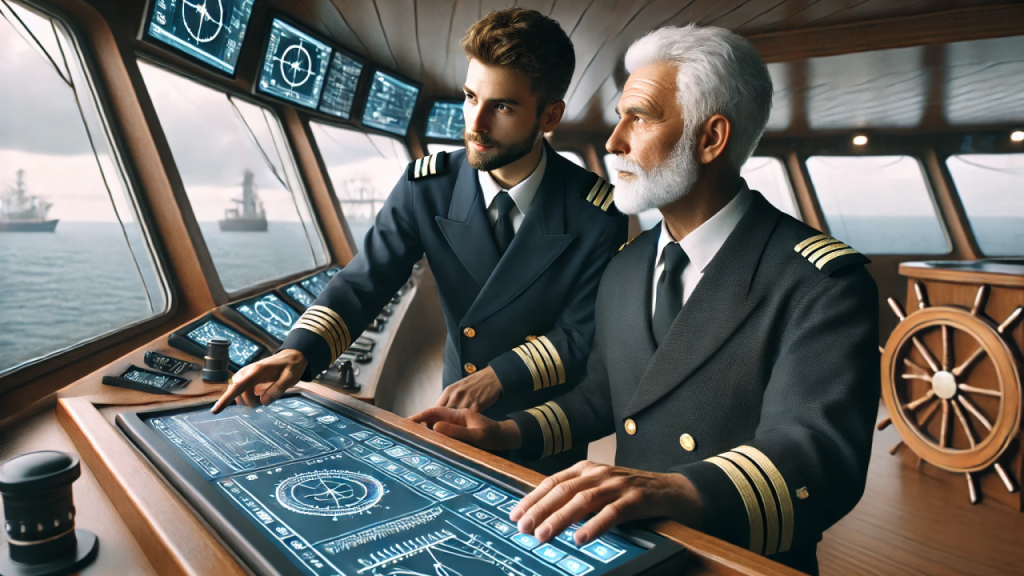
Captain Miguel Torres had seen it all. After nearly three decades at sea, he had weathered some of the world’s fiercest storms, navigated complex shipping lanes, and managed crews from every corner of the globe. He was a respected leader on board, known for his quick thinking and steady hand under pressure. But now, as he stepped onto the bridge of his new ship, The Neptune Voyager, Miguel felt something he hadn’t experienced in years—uncertainty.
The Neptune Voyager wasn’t just any vessel; it was outfitted with the latest in maritime technology. The bridge was filled with screens, buttons, and automated systems that promised to make navigation and operations smoother, safer, and more efficient. But to Miguel, these advancements felt foreign, even unsettling. He could still remember his first vessel, where the hum of the engine and the feel of the controls told him everything he needed to know. Now, the electronic hum of the digital displays seemed to drown out everything he once trusted.
The Challenge: Embracing Change vs. Years of Experience
As he reviewed the new Electronic Chart Display and Information System (ECDIS), Miguel’s mind wandered back to his training years, where he spent countless hours plotting courses on paper charts. His instincts had been honed by experience—by feeling the pulse of the sea, by reading maps with his hands and his mind. Now, a sleek monitor in front of him displayed all the data he needed in real-time. The younger officers handled ECDIS with ease, almost as if it were second nature. For Miguel, it felt like he was losing the tactile connection he once had with navigation.
One of the junior officers, Emma, noticed him lingering by the display, studying it with a cautious eye.
“Captain, would you like a hand with the ECDIS settings?” she asked, offering help without a hint of judgment.
Miguel hesitated but nodded. “Yes, thank you, Emma. It’s…different from what I’m used to.”
Emma smiled. “I remember feeling the same way during my training. They updated the system right before I graduated, and we had to adapt on the go. But once you get used to it, it’s pretty intuitive.”
Miguel chuckled, appreciating her tact. He knew he was expected to lead by example, and while he resisted asking for help, he couldn’t deny that he needed it. As Emma walked him through the basic controls, Miguel couldn’t help but feel a pang of frustration. In a matter of minutes, Emma had shown him shortcuts and functions he never would have discovered alone.
Overcoming the Resistance: A Balancing Act of Old and New Skills
The integration of technology was everywhere on The Neptune Voyager, and ECDIS was just the beginning. The ship was equipped with remote engine monitoring, a system that allowed onshore teams to view real-time data on engine performance. For Miguel, this was the ultimate test of letting go. Over the years, he’d developed an intimate understanding of engine sounds and vibrations. He could diagnose potential issues simply by listening. But now, shore-based engineers had access to all the data, and they could intervene if they detected an issue before he even noticed it.
To the younger crew members, this was a clear improvement. It meant quicker responses and less guesswork. But to Miguel, it felt like a piece of his role was being taken from him, a piece he had spent years mastering.
During a staff meeting, the ship’s engineer, Alexei—a bright, young engineer fresh out of maritime school—explained the benefits of the new monitoring system. Miguel noticed the enthusiasm among the younger crew members, but he also saw that the other senior officers shared his hesitation.
“I understand the benefits, Alexei,” Miguel said, choosing his words carefully, “but what happens if there’s a communication failure? Or a software glitch? I trust my ears and my instincts.”
Alexei paused, sensing the depth of Miguel’s concern. “Captain, those instincts are irreplaceable, and I’m not here to change that. But this system can complement what you already know. If we ever face an issue, your experience will be our guide. This technology doesn’t replace your skills—it enhances them.”
It was a small reassurance, but it was enough. Miguel realized that the younger crew members respected his experience and weren’t dismissing it. They simply wanted him to see that technology could be a tool, not a threat.
The Turning Point: Training and Mentorship
The real turning point for Miguel came when the shipping company arranged a series of training sessions tailored specifically for senior officers. Instead of being forced through rapid workshops or impersonal tutorials, these sessions were hands-on, patient, and paced with respect for their experience.
For the first time, Miguel was paired with a junior officer as a mentor, but in a way that allowed for two-way learning. Emma, his ECDIS guide, became his “tech mentor,” while he shared his navigational expertise and crisis management skills with her. This exchange fostered a deeper respect between them, bridging the generational gap with mutual learning.
They spent hours working together, with Emma teaching Miguel the digital intricacies of the ship, while Miguel taught Emma how to think beyond the screens. He showed her how to read the sea, how to notice subtle changes in the air pressure that might indicate incoming weather shifts, things no digital display could ever convey. They each brought something valuable to the table, and together, they created a balance between tradition and innovation.
Lessons Learned and Moving Forward
Miguel’s journey on The Neptune Voyager taught him a few things about adapting to change. For one, he learned that resistance to technology wasn’t simply about refusing to learn—it was about protecting the skills and instincts that had defined his career. However, he also realized that the younger generation’s approach to technology wasn’t a challenge to his expertise, but rather an opportunity to expand it.
In the end, he accepted that traditional skills and modern technology don’t have to be at odds. They can, in fact, complement each other, enhancing safety, efficiency, and operational readiness on board.
Recommendations for Supporting Senior Officers in Adapting to Technology
- Tailored Training Programs Training for senior officers should respect their years of experience. Miguel’s story illustrates that when training is personalized and paced, it can transform skepticism into confidence.
- Mentorship Programs Pairing senior officers with tech-savvy juniors fosters mutual respect and encourages skill-sharing in both directions. This mentorship is what helped Miguel and Emma build trust and gain valuable insights from each other.
- Continuous Learning Opportunities Like Miguel’s training, ongoing learning initiatives show that the industry values growth at all levels. Training shouldn’t be one-off; it should evolve alongside technology.
- Respecting Traditional Skills Miguel’s expertise in reading the sea and handling unexpected situations is invaluable. Technology should be positioned as a tool to support these skills, not replace them.
- Involving Senior Officers in the Tech Transition The shipping company recognized the importance of getting input from experienced officers. By involving people like Miguel in the conversation about new technologies, they fostered buy-in and minimized resistance.
From Ship to Shore: Lessons Learned Beyond the Dock
Captain Miguel’s journey reminds us that technology in the maritime industry is both a tool and a challenge. For senior officers like him, it’s not just about learning new systems but finding a way to integrate years of experience with emerging innovations. This journey isn’t one they should face alone.
As an industry, we need to support our seasoned professionals by fostering mentorship, creating training tailored to their needs, and encouraging a culture that values both traditional skills and modern tools. Only by bridging this gap between experience and technology can we prepare our crews—and our industry—for a safer, more efficient future.
If you’ve had similar experiences or thoughts on how we can better support our senior officers, let’s keep the conversation going. Share your insights below. After all, every story and perspective contributes to building a stronger, more united maritime community.
#MaritimeTechnology #LeadershipAtSea #Mentorship #SeafarersAdapt #StrongerTogether#BeyondTheDock

Deja una respuesta