

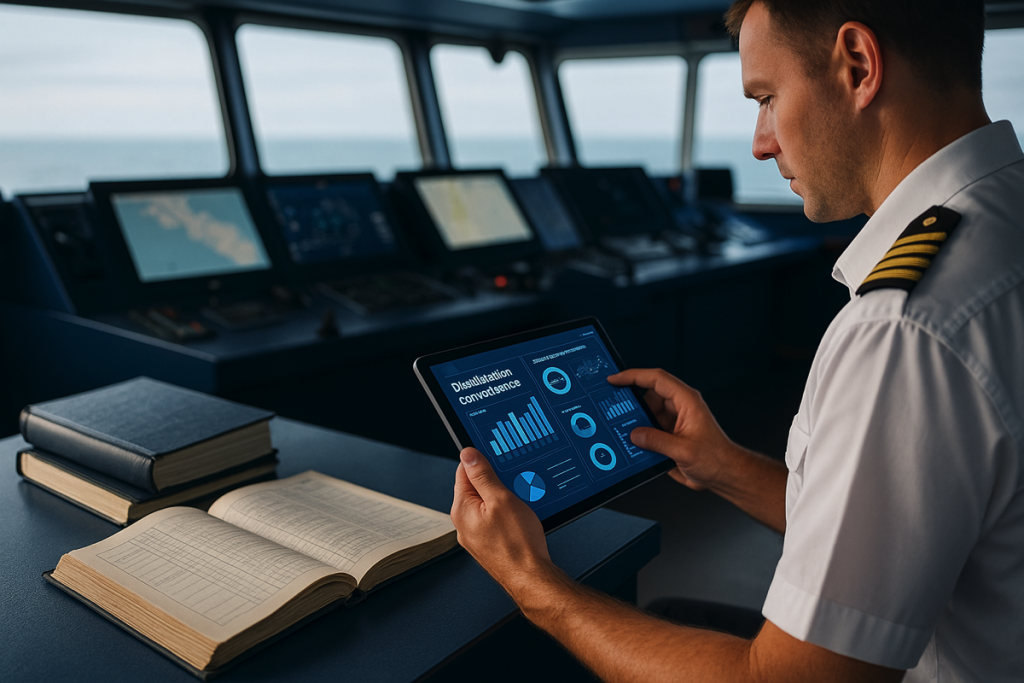
Once upon a time, compliance on ships was a matter of binders, logbooks, highlighters, and sticky notes. Officers carried clipboards. Checklists were signed by hand. And when an audit loomed, the office printer worked overtime.
But in 2025, paper is no longer king. Maritime compliance has gone digital — and the change is more than cosmetic. It’s transforming how seafarers work, how shipowners monitor, and how inspectors verify.
So what exactly is happening in this new era of maritime digital compliance?
📂 Digital Logs Are the New Standard
No more coffee-stained engine logs or illegible entries in the GMDSS book. Today’s vessels use:
- Electronic Logbooks (e-logs) with real-time entries
- Integrated Bridge Systems that auto-capture navigational data
- Digital engine performance monitoring platforms
- E-signatures with timestamp verification
This doesn’t just reduce paperwork — it increases data integrity and audit readiness. Systems now flag missed entries, alert for anomalies, and prevent backdating.
🖥️ Centralized Compliance Dashboards
Fleet managers no longer wait for emails or Excel sheets to check compliance. With cloud-based platforms, they can:
- View MARPOL compliance status
- Monitor work/rest hour violations
- Track training certificates and expiration dates
- Access safety drills and maintenance logs — from shore
This centralized control is especially valuable for managing multi-flag, multi-crew fleets — where consistency used to be a logistical nightmare.
🔄 Automating Routine Tasks = More Time for Safety
Digitalization doesn’t replace responsibility — it supports it. Repetitive tasks like checklist generation, certificate tracking, and inspection reminders can now be automated.
That means officers can spend less time chasing forms and more time ensuring real-world safety on deck, in the engine room, and during port ops.
🔐 Cybersecurity and Data Trust
With great platforms come great vulnerabilities. IMO 2021 cyber risk guidelines are now fully integrated into ISM Code expectations, and in 2025, digital compliance systems must be:
- Password-protected
- Encrypted and regularly backed up
- Segregated by user roles
- Auditable by authorized personnel only
Trust in digital systems depends on trust in how they’re protected.
📋 Inspections Are Faster — and Smarter
Port State Control, vetting inspectors, and company auditors increasingly expect access to real-time data dashboards. Some inspections now begin before the inspector steps aboard — thanks to remote access or QR-coded documentation.
Digitalization supports predictive compliance: systems that warn you before something becomes non-compliant.
Example: A system might alert when a firefighting inspection is overdue based on sensor input — not just calendar dates.
⚓ Final Thought
Paper isn’t extinct — but its dominance is. The future of maritime compliance is digital, integrated, and proactive. Whether you’re onboard or ashore, your ability to adapt will define whether your operation stays ahead — or constantly plays catch-up.
Because in the digital age, compliance isn’t just checked — it’s tracked, shared, and expected in real time.
📬 Love all things maritime? Get exclusive stories, practical tips, and leadership insights delivered straight to your inbox—subscribe now!!!
We send out regular insights, regulation changes, and practical guides for cadets and seasoned officers alike.
Fill out the form below and stay connected with Maritime Mindshift.
📢⚓ Calling All Maritime Enthusiasts!
📝📸 Have an article, story, or photo to share? Send your submissions to contact@maritimemindshift.com and get featured on our blog!
🌊🚢 Join the crew—let’s navigate new horizons together!
“Ready to transform your maritime journey from dream to reality? Dive into De Cadete a Capitán for practical lessons, real-life stories, and the mindset you need to lead with confidence at sea. Set your course for success—grab your copy today and start charting a new future!”

Deja una respuesta