

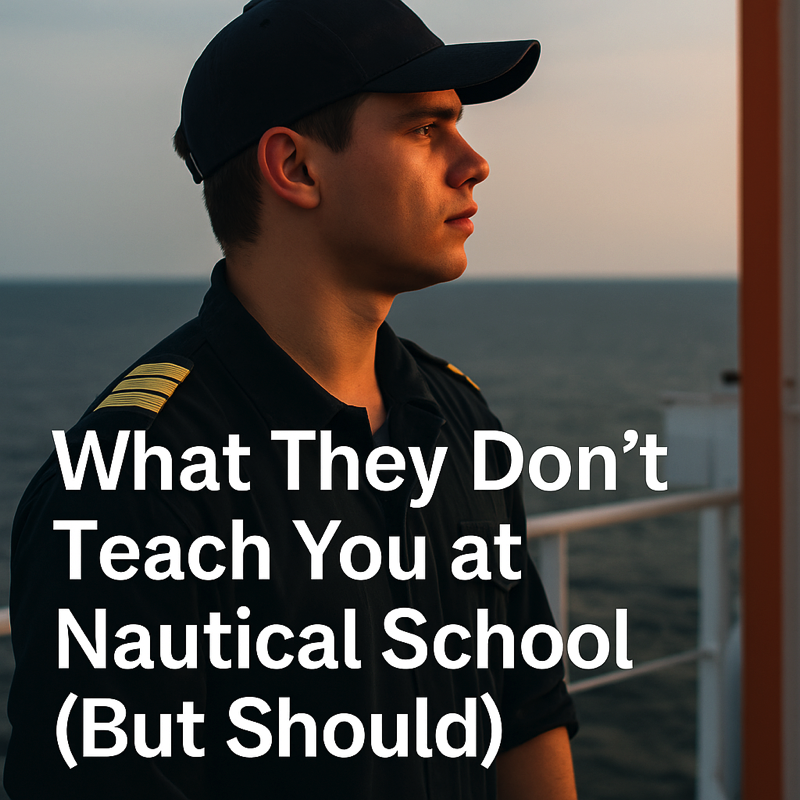
Nautical schools do a great job teaching you the basics: COLREGs, navigation, chart work, cargo handling, meteorology, stability calculations. You graduate with certificates, checklists, and enough theory to pass every exam. And yet, once you’re onboard your first ship, reality slaps harder than a rogue wave.
There are things no textbook covers. Lessons no simulator can simulate. And skills that no final exam ever asks about — but every real seafarer wishes they had learned sooner.
So here’s what they don’t teach you at nautical school — but absolutely should.
🔧 1. You’re Not Just a Cadet — You’re a New Teammate
The first impression you make matters more than you think. No one expects you to know everything — but they do expect humility, willingness to work, and respect for the rhythm of the ship. Learn people’s names. Watch quietly before you ask. Say “thank you” often. You’re joining a tight-knit crew, not just clocking in for practice.
⏱️ 2. Time Management at Sea Is an Artform
Nobody really shows you how to manage exhaustion on 6/6 watches, how to plan sleep between drills, inspections, and port calls. At sea, your energy is your responsibility. Burn out early, and it shows in your performance — and your safety. You need to know how to balance focus and recovery, long before you manage cargo or handle emergencies.
🧠 3. Mental Resilience > Technical Accuracy
Yes, mistakes in navigation are serious. But equally dangerous is freezing under pressure or hiding an error out of fear. Nautical schools focus on precision. Real life demands adaptability, communication, and owning up when things go wrong. Mental resilience isn’t optional at sea — it’s your lifeline.
🛠️ 4. Practical Maintenance Isn’t Always in the Manual
You may know the schematic of a lifeboat, but do you know how to grease the davits on a moving deck? Can you troubleshoot a navigation light during rough weather? Crews appreciate cadets who offer help with real tasks, not just theory. Ask to assist. Get your hands dirty. Learn from the fitter, the bosun, the oiler. They often know more than the simulator ever will.
🧍 5. Leadership Is Learned by Watching (and Listening)
You’re not a captain yet — but you’re already building your leadership brand. How you treat others, how you respond to correction, how you handle stress — people notice. The best captains didn’t learn leadership in a PowerPoint. They learned it on deck, by watching both good and bad examples.
📶 6. The Loneliness Is Real — and Manageable
They don’t tell you that some nights you’ll feel invisible. Or that missing a family event will sting longer than any rough sea. Emotional survival is a skill too. Bring books. Call home often. Find someone onboard you can talk to. You’re not weak for feeling disconnected — you’re human. Stay human.
🚢 Final Thought
Nautical school is the beginning. The ocean will be your real teacher.
What they don’t tell you in class — the unwritten rules, the emotional load, the unspoken codes — are often the ones that define your career. Not your GPA, not your simulator score. But how you carry yourself when no one’s watching.
Learn fast. Stay curious. Stay humble. That’s the real curriculum.
📬 Love all things maritime? Get exclusive stories, practical tips, and leadership insights delivered straight to your inbox—subscribe now!!!
We send out regular insights, regulation changes, and practical guides for cadets and seasoned officers alike.
Fill out the form below and stay connected with Maritime Mindshift.
📢⚓ Calling All Maritime Enthusiasts!
📝📸 Have an article, story, or photo to share? Send your submissions to contact@maritimemindshift.com and get featured on our blog!
🌊🚢 Join the crew—let’s navigate new horizons together!
“Ready to transform your maritime journey from dream to reality? Dive into De Cadete a Capitán for practical lessons, real-life stories, and the mindset you need to lead with confidence at sea. Set your course for success—grab your copy today and start charting a new future!”

Deja una respuesta